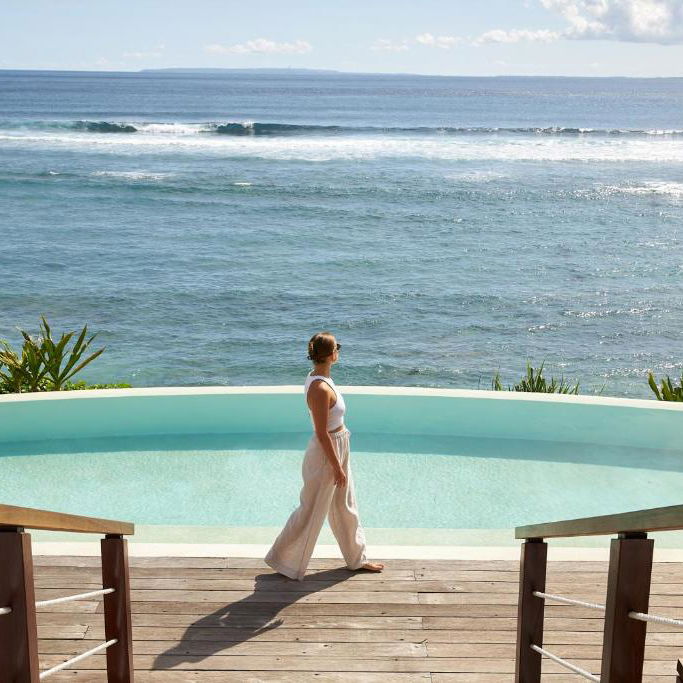
Nusa Ceningan


You don't come to Kutuh Kaja by accident. You arrive here because you stopped looking for Bali on road signs.
Behind The Purist Villas, across a small stone bridge over the Tawar River, lies Kutuh Kaja: the village the resort borrows its quiet from, and gives almost nothing back to change.

The name Ubud comes from the Balinese ubad, meaning medicine. For centuries Ubud was a centre of healing, with medicinal plants growing along its sacred rivers. The priest Rsi Markandya is said to have meditated here in the eighth century, and the Gunung Lebah temple remains a place of pilgrimage today.
In 2012, UNESCO inscribed the subak, Bali's traditional irrigation system, as World Heritage. The rice terraces surrounding The Purist Villas belong to that same living heritage; they are still worked today, not preserved behind glass.

The village lies two minutes on foot from the resort. You cross the Tawar River over a small stone bridge and walk north. Tall houses, gardens enclosed by walls of grey volcanic stone with niches and daily offerings tucked into them.
This is not a village rebuilt for visitors. It is a village that lives.

The river runs along the edge of the property, a constant background sound day and night. It is also a corridor of biodiversity: white herons stalk its banks, blue dragonflies work the reeds, and the water itself changes tone with the season and the rain upstream.

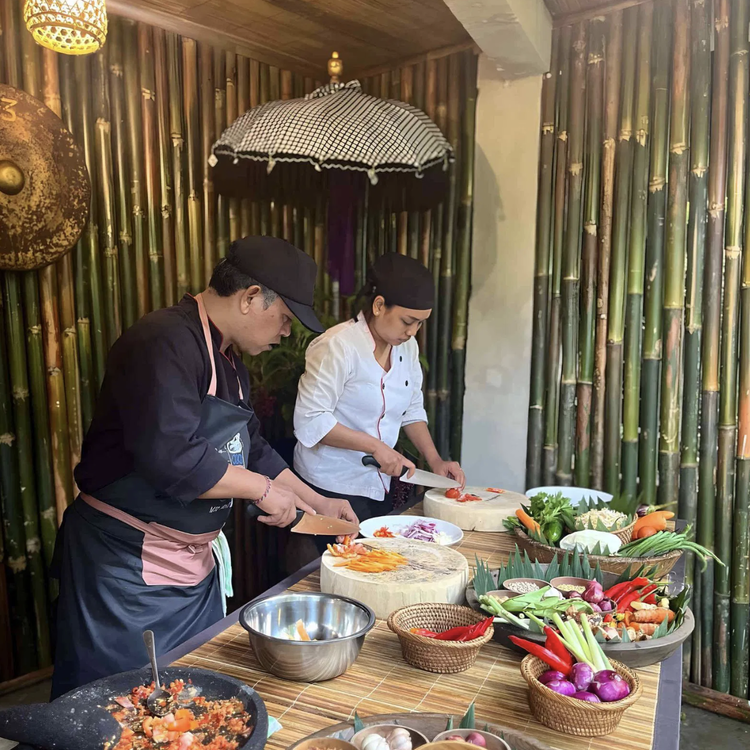
The centre of Ubud is a kilometre and a half on foot: an art and crafts market, the Puri Saren Agung royal palace with its Legong and Barong dance performances, and the Sacred Monkey Forest Sanctuary, twenty-seven hectares, more than 1,200 macaques and three fourteenth-century temples. The Purist Villas runs free shuttles twice daily and daily tours to temples, the Tegalalang rice terraces, markets and cooking classes.
The Purist Villas. Ubud, Bali. One and a half kilometres from the centre. Two minutes from the village. On the banks of the Tawar River.









 Carrer de l'Alcalde Jaume Marí Roig, 5,
 info@giridestinations.com
 (+34) 971 33 33 45